
Serengeti Calving Season: When to See Baby Wildebeest and Predators
When is the Serengeti calving season, where does it happen and which predators will you see? Everything you need to plan a January–March safari.
Every year, the Serengeti calving season turns the southern plains into one of Africa's best wildlife nurseries.
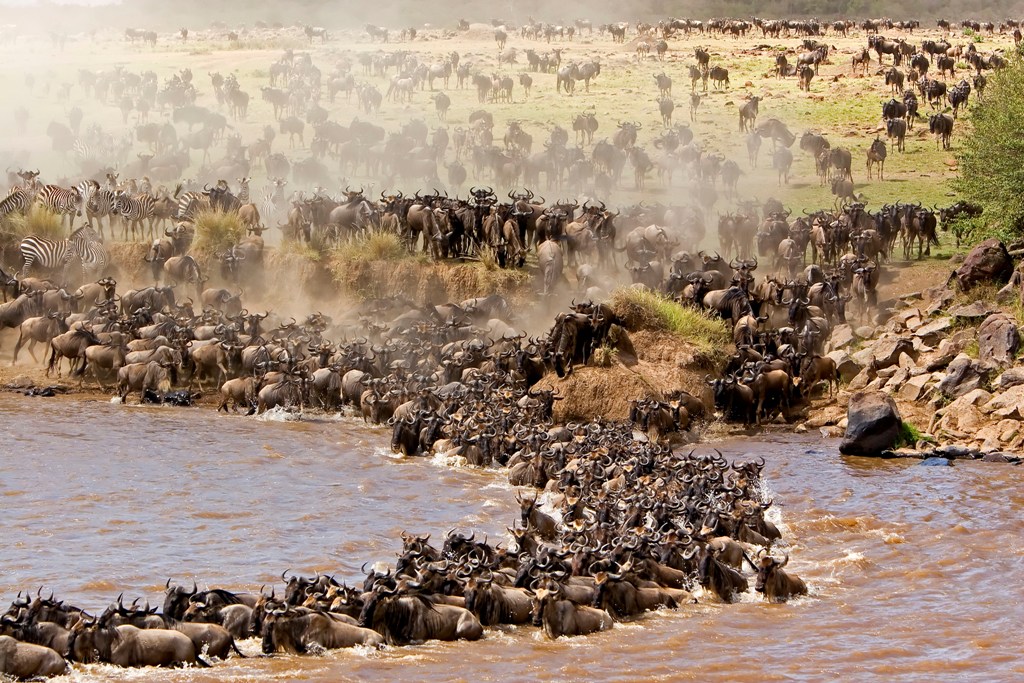
Thousands of wildebeest gather across the short-grass plains. Females give birth to newborn calves. Meanwhile, predators move in to hunt one of nature's biggest crowds of weak young animals.
This is the Serengeti calving season.
For travelers, January and February can offer a very different safari from the famous dry-season migration and river crossings. Instead of watching huge herds move toward the Mara River, you can spend hours among newborn wildebeest, zebras and gazelles. You can also watch some of the Serengeti’s most powerful predators.
The calving season usually runs from January through March. January and February give the best chances, mainly around the southern Serengeti and the Ndutu plains. But the exact timing shifts with rain and grazing. So treat it as a window of time, not a fixed date.
Many wildlife fans see the Serengeti calving season as one of the best times of year to visit.
When Is the Serengeti Calving Season?
The main calving period falls in the January–March part of the Great Migration cycle.
Late January and February usually mark the peak.
After the rains bring fresh grazing, the herds move toward the southern short-grass plains. The rich grass feeds pregnant and nursing wildebeest, while the open land gives the animals a clear view.
Timing is not identical every year.
Rainfall can arrive earlier or later, and the herds move accordingly.
Here is a useful planning guide.
| Period | What to Expect |
|---|---|
| December | Herds begin gathering in the southern ecosystem |
| Early January | Increasing numbers of wildebeest and green plains |
| Late January | Calving activity becomes increasingly noticeable |
| February | Peak calving and intense predator activity |
| March | Calves become stronger and herds begin moving northward |
The Tanzania tourism information now names late January to February as the key time for wildebeest calving. It also points to the predator action that comes with it.
Where Does the Serengeti Calving Season Take Place?
Most of the action happens in the southern Serengeti and the Ndutu plains.
Ndutu lies on the southern edge of the Serengeti ecosystem, close to the Ngorongoro Conservation Area.
This area matters because of its open short-grass plains.
During the calving season, location matters a lot.
Suppose your main goal is to see newborn wildebeest. Staying in central Serengeti and hoping to drive south for a day may not be as good. Staying close to the calving grounds works better.
So a good calving-season safari should put you in the southern Serengeti/Ndutu area for several nights.
Why Do Wildebeest Calve in the Southern Serengeti?
Conditions on the southern plains suit the migrating herds.
After seasonal rains, the short grass becomes fresh and nutritious.
Open terrain also gives excellent visibility.
The first hours and days of life are vital for a newborn calf.
A wildebeest calf must become mobile quickly because predators are always nearby.
So many births at once make a rare natural event. Predators have a huge number of possible prey animals nearby at the same time.
This is one reason the Serengeti calving season brings such intense wildlife action.
How Many Wildebeest Calves Are Born During the Serengeti Calving Season?
Estimates often put the number of wildebeest calves born at the peak at hundreds of thousands. Some sources say about 500,000 calves are born in the short calving window.
At the peak of the season, thousands of births can happen in a single day.
The exact numbers differ between estimates and years. So it is better to grasp the scale than to treat one number as a promise.
For a safari, what matters is the huge number of newborn animals across the southern plains.
What Happens When a Wildebeest Gives Birth?
A wildebeest calf enters a dangerous world.
It does not have days to hide in a nest or den.
The calf must stand and move remarkably quickly.
Soon after birth, it can begin following its mother.
This matters because the herd may need to move, and predators constantly look for weak young animals.
For visitors, watching a birth can be a deeply moving moment.
But remember that wildlife encounters happen naturally.
A responsible safari should never interfere with a birth or chase an animal. It should also never crowd a mother and calf for a better photo.
Why Are There So Many Predators During the Serengeti Calving Season?
The answer is simple:
Food.
Thousands of newborn animals give predators a huge chance to feed.
Lions, cheetahs, spotted hyenas and other predators share the landscape with the herds.
Open plains make predators and prey easy to watch.
So many people see calving season as one of the best times for watching predators.
The Tanzania tourism information describes late January and February as a great time to see predator action linked to the calving season.
Lions During the Serengeti Calving Season
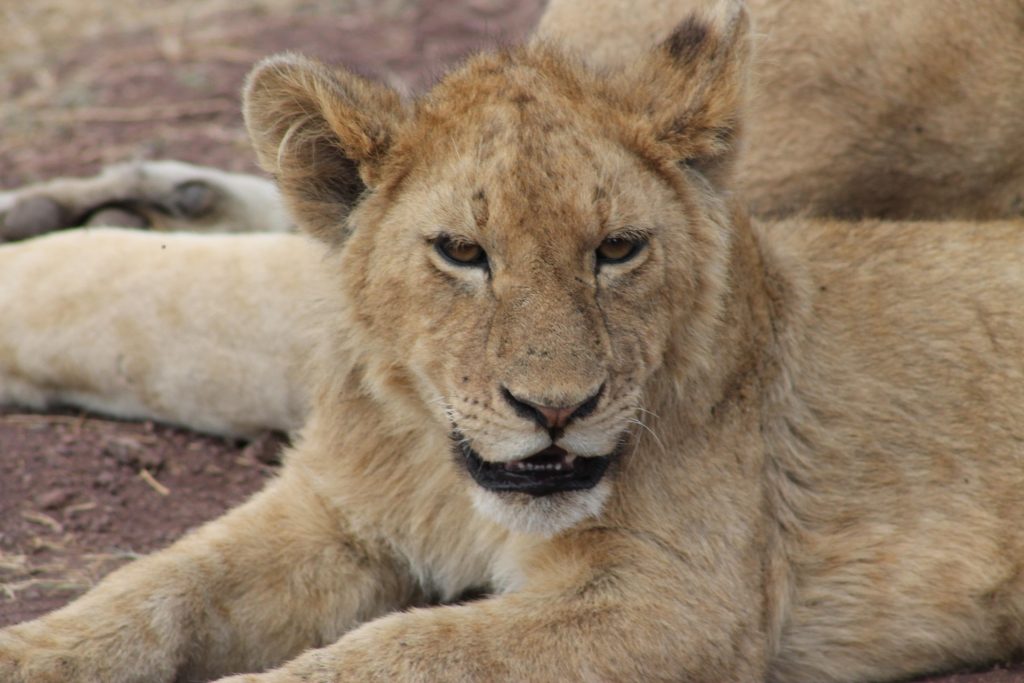
Lions are among the best predators to watch around the calving grounds.
They may patrol the edges of large herds. They may also rest near areas where animals gather, and they become active during cooler parts of the day.
A lion hunt can happen quickly.
One moment the pride may appear relaxed.
Then the behavior changes.
Heads rise.
The animals begin watching the herd.
A chase may follow.
But even in peak calving season, a successful kill is never guaranteed.
That uncertainty is part of what makes watching wild predators so fascinating.
Cheetahs in the Serengeti Calving Season
For many photographers, cheetahs are one of the big draws of the calving season.
Open short-grass plains give great views of these fast predators.
Cheetahs often rely on speed rather than strength.
As a result, their hunting can be dramatic to watch in open country.
You may see a cheetah:
- Scanning a herd.
- Stalking a young animal.
- Moving low through the grass.
- Suddenly accelerating.
- Chasing prey across the open plain.
- Resting after an unsuccessful hunt.
A chase may last only seconds.
That is why early morning and late afternoon game drives are so worthwhile.
Spotted Hyenas During the Serengeti Calving Season
Spotted hyenas are smart, adaptable predators.
Calving season gives them many animals to hunt.
You may see hyenas:
- Moving through herds.
- Searching for vulnerable calves.
- Following predator activity.
- Feeding on carcasses.
- Returning to dens.
- Interacting with members of their clan.
Hyenas are often misunderstood as simply scavengers.
In reality, they are skilled hunters and key predators in the Serengeti ecosystem.
What About Leopards in the Serengeti Calving Season?
You can also meet leopards during the calving season.
But they are usually harder to find than lions or cheetahs.
Leopards are solitary and secretive. They often use areas with thick bush, trees or rocky cover.
So nobody should promise a sighting just because you visit during calving season.
A good guide will search likely spots and keep hopes realistic.
Are There Other Animals During the Serengeti Calving Season?
Absolutely.
The southern Serengeti is not just about wildebeest.
You may also encounter:
- Zebras.
- Thomson's gazelles.
- Grant's gazelles.
- Elands.
- Buffaloes.
- Giraffes.
- Warthogs.
- Ostriches.
- Jackals.
- Baboons.
- Hippos.
- Elephants.
- Various antelope species.
- Numerous bird species.
Many kinds of plant eaters make the ecosystem much richer to see.
You are not simply visiting a nursery for baby wildebeest.
Instead, you are entering a landscape where thousands of animals respond to the same seasonal changes.
Is February the Best Month for the Serengeti Calving Season?
Do you want the most newborn wildebeest and predator action? If so, February is usually the best month to pick.
The peak usually falls around February. But the exact timing depends on the rains.
Some births occur before the peak, and others continue afterward.
This means you should not think:
“February 15 = guaranteed peak.”
Nature does not follow an exact schedule.
Instead, think of February as the heart of the calving window.
Is January a Good Month for the Serengeti Calving Season?
Yes.
January can be great, especially near the end of the month.
The herds gather across the southern plains. The landscape is green, and calving activity starts to grow.
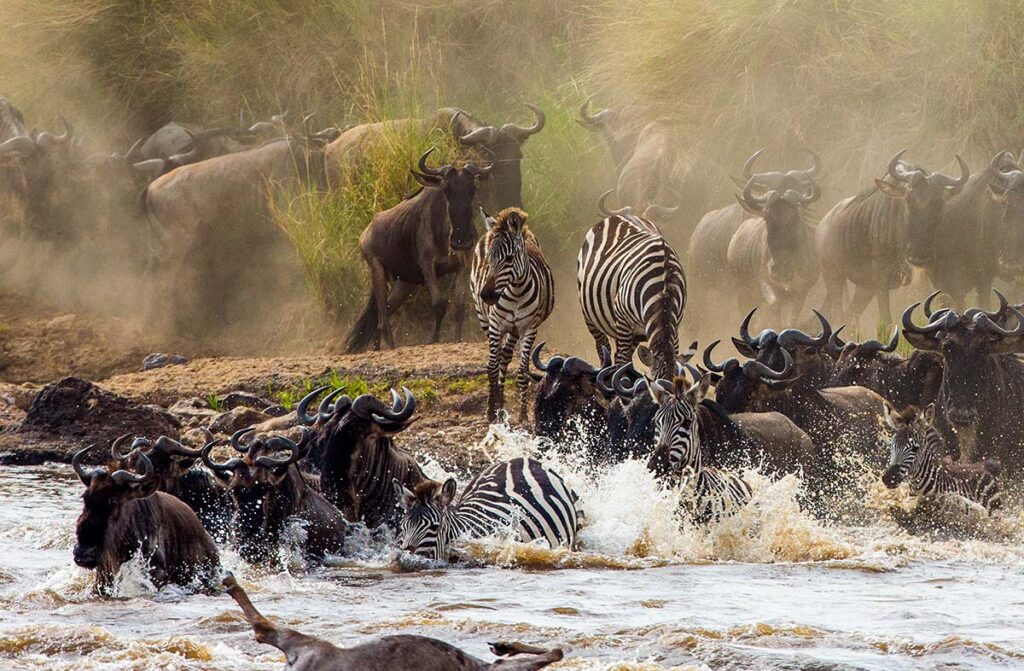
It can also suit travelers who want the calving sights with possibly fewer visitors than some of the busiest periods.
If your dates are flexible, late January into February is a very strong choice.
What About March in the Serengeti Calving Season?
March can still bring great wildlife viewing.
Calving activity may continue. But the herds and calves slowly change their behavior as the young animals grow stronger.
The migration cycle continues.
March can therefore be a good choice for travelers who want:
- Green landscapes.
- Migratory wildlife.
- Newborn animals.
- Predators.
- Birdwatching.
- Fewer visitors than the classic dry-season period.
The further into March you travel, the less you should count on seeing the peak crowd of newborn calves.
What Does the Serengeti Calving Season Look Like?
This scenery is very different from the classic golden Serengeti many travelers see in dry-season photos.
The southern plains can be:
- Green.
- Fresh.
- Lush.
- Open.
- Dramatic.
- Covered with grazing herds.
Clouds can make stunning backgrounds for photos.
Short rain showers can also change the light in dramatic ways.
For photographers, this makes the Serengeti calving season particularly attractive.
Does It Rain During the Serengeti Calving Season?
Yes.
January and February fall in the wetter part of the Serengeti's year.
But rain does not mean your safari will be ruined.
Weather can vary a lot from day to day.
You may experience:
Sun → clouds → rain → sunshine.
within the same game drive.
The advantage of the rain is that it helps grow the fresh grass that attracts the herds.
Without the rains, the calving grounds would not be the same.
Is the Serengeti Calving Season Better Than the River-Crossing Season?
This depends entirely on what you want to see.
Calving season
January–February
You are looking for:
- Newborn wildebeest.
- Predator activity.
- Green landscapes.
- Cheetah hunts.
- Lions.
- Hyenas.
- Photography.
- Large concentrations of herbivores.
River-crossing season
Generally associated with the northern migration period later in the year
You are looking for:
- Massive herds.
- River crossings.
- Dramatic movement.
- Northern Serengeti landscapes.
The river crossings are famous. However, they are also highly unpredictable.
Herds may cross before you arrive, after you leave, or stay on one side of the river for hours.
Calving season offers a different kind of drama. For many wildlife fans, it is also a more reliable thrill.
Serengeti Calving Season vs River-Crossing Season
| Experience | Calving Season | River-Crossing Period |
|---|---|---|
| Main months | Jan–Feb | Later in the year |
| Main location | Southern Serengeti/Ndutu | Northern Serengeti/Mara ecosystem |
| Newborn animals | Excellent | Limited |
| Predator activity | Excellent | Excellent |
| Green scenery | Excellent | Usually less green |
| River crossings | No | Possible |
| Photography | Excellent | Excellent |
| Predictability | Calving window relatively reliable | Crossings highly unpredictable |
| Crowds | Generally lower than peak crossing areas | Can be higher |
| Best for | Wildlife behavior, newborns, predators | Migration drama and crossings |
Is Serengeti Calving Season Good for First-Time Visitors?
Absolutely.
In fact, it can be a great first look at Serengeti.
A first-time visitor can experience:
- Huge herds.
- Newborn animals.
- Lions.
- Cheetahs.
- Hyenas.
- Beautiful green landscapes.
- Birdlife.
- Classic African sunsets.
- The Great Migration in one of its most important stages.
You do not need to visit during the river-crossing season to see the Great Migration.
The migration is a cycle that runs all year, not a single event.
How Many Days Do You Need for the Serengeti Calving Season?
If calving is the main reason for your trip, plan enough time in the southern Serengeti.
1 night
Possible, but too short for most travelers who want to see calving.
2 nights
A reasonable minimum.
You get many game drives and more chances to meet predators and newborns.
3 nights
A very good option.
Three nights give your guide more room to explore different areas and follow wildlife activity.
4 nights or more
Ideal for keen wildlife fans and photographers.
The more time you have, the more chances you create to see unusual behavior and predator action.
Where Should You Stay for the Serengeti Calving Season?
Location is one of the most important choices.
If your main goal is calving, choose accommodation with easy access to the southern Serengeti and Ndutu area.
Do not choose a place only because it looks luxurious.
A beautiful lodge several hours from the calving grounds may be less useful. This matters most if your main goal is seeing newborn wildebeest.
During peak season, camps and lodges in the southern area book up fast.
So plan early.
Ndutu or Central Serengeti for the Serengeti Calving Season?
If calving is your main aim, make Ndutu and the southern plains your priority.
Central Serengeti remains a great place to see wildlife. But the migration does not stay still.
Long daily drives from central Serengeti to the southern calving grounds can cut your time watching wildlife.
The principle is simple:
Stay close to the wildlife you came to see.
What Is a Typical Serengeti Calving Season Safari Day Like?
A typical day might begin before sunrise.
You wake early, have a quick breakfast and leave for a morning game drive.
The first hours of daylight give great light for photos.
You may encounter:
- Mothers with newborn calves.
- Herds moving across the plains.
- Predators becoming active.
- Cheetahs searching for opportunities.
- Lions resting after a night hunt.
After the morning drive, you may return to camp for lunch and a rest.
Later in the afternoon, you head back into the plains.
As the sun begins to fall, the landscape changes again.
The grass becomes golden.
Then the sky may turn orange or pink.
Herds keep moving.
Meanwhile, predators become active again.
What Should You Bring for a Serengeti Calving Season Safari?
This is a greener, wetter period, so pack a little differently from a dry-season safari.
Consider bringing:
- Lightweight breathable clothing.
- Long trousers.
- Light fleece or jacket.
- Lightweight rain jacket.
- Comfortable walking shoes.
- Hat.
- Sunglasses.
- Sunscreen.
- Insect repellent.
- Binoculars.
- Camera.
- Extra batteries.
- Power bank.
- Waterproof protection for electronics.
Early mornings can be cool, so do not pack only hot-weather clothing.
Is the Serengeti Calving Season Good for Photography?
It can be exceptional.
The green landscape gives rich backgrounds, while newborn animals help you tell powerful stories.
You can photograph:
- Mother and calf.
- First steps.
- Nursing.
- Herd movement.
- Predator-prey interactions.
- Cheetahs on open plains.
- Lions stalking.
- Hyenas.
- Zebras.
- Dramatic skies.
The soft green-season light can also look very different from the harsh golden tones of the dry season.
What Camera Equipment Should You Bring?
You do not need pro gear to enjoy the trip.
A modern camera with a good telephoto lens can be very useful.
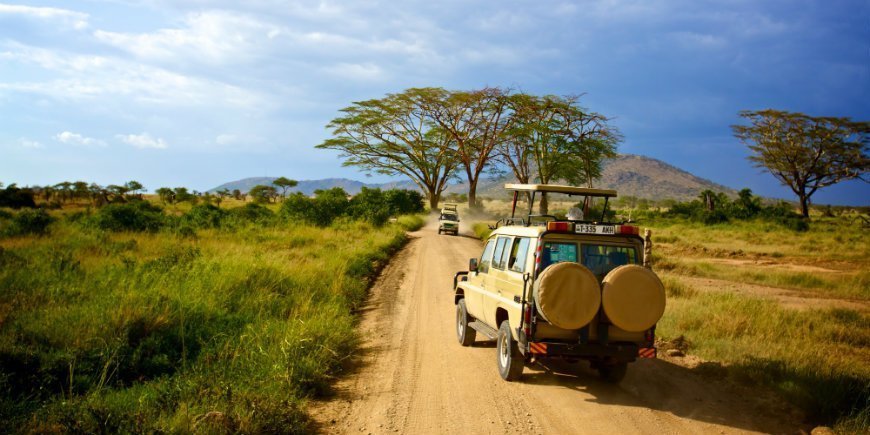
For serious wildlife photography, a longer lens gives you more freedom and lets you keep a respectful distance.
Useful equipment includes:
- Camera body.
- Telephoto lens.
- Wide-angle lens.
- Spare batteries.
- Memory cards.
- Lens cloth.
- Dust protection.
- Rain protection.
Most of all, remember that the trip matters more than the gear.
Is the Serengeti Calving Season Crowded?
It depends on exactly where and when you travel.
The calving season can draw keen wildlife fans, photographers and safari travelers, especially around the peak.
But it usually feels different from some of the busiest migration spots during peak river-crossing times.
The southern plains can still have several safari vehicles at important sightings.
Responsible guides avoid needless crowding and keep a respectful distance from animals.
Is the Serengeti Calving Season More Expensive?
Prices depend on accommodation, location, safari length, vehicle type and demand.
Peak calving dates can book up fast, especially for camps close to the best wildlife areas.
However, traveling in the green season can sometimes give better value than the busiest dry-season times.
Do not choose your dates only on price.
If seeing newborn wildebeest is your dream, the right place and time of year matter much more.
Is the Serengeti Calving Season Good for Families?
It can be.
Children who like animals may love seeing newborn wildlife.
But parents should remember that calving season also means natural hunting between predators and prey.
Children may see animals being hunted or carcasses in the wild.
Parents should explain that a safari is a view of nature, not a wildlife theme park.
A good guide can explain these behaviors in a way that suits their age.
Is the Serengeti Calving Season Good for a Honeymoon?
Yes.
A honeymoon safari during the calving season can combine:
- Luxury accommodation.
- Green landscapes.
- Wildlife.
- Beautiful sunsets.
- Private game drives.
- Newborn animals.
- Predator encounters.
The southern Serengeti can feel especially romantic when the plains are green and animals are spread across the land.
Couples who want a quieter safari may also enjoy traveling outside the busiest dry-season times.
Is the Serengeti Calving Season Safe?
A properly organized safari is built around watching wildlife from a safe distance.
Never approach wild animals on foot unless you are taking part in an activity planned and guided for walking.
Do not leave your vehicle unless your guide tells you it is safe and allowed.
Never try to approach a predator or newborn animal for a photo.
The best wildlife encounters happen when animals behave naturally.
Can You See the Big Five During the Serengeti Calving Season?
Yes.
Serengeti is home to a wide range of large mammals, including the famous Big Five.
But no responsible safari company should promise that you will see every member of the Big Five.
Wild animals move freely.
The advantage of calving season is that so much prey can boost predator activity. This gives you great chances to look for lions, leopards and other predators.
Is the Serengeti Calving Season Only About Wildebeest?
No.
One of the biggest myths is that the whole trip revolves around newborn wildebeest.
The southern Serengeti becomes a much bigger natural spectacle.
You may encounter:
Wildebeest + zebras + gazelles + predators + birds + other herbivores.
All interacting with the changing environment.
The migration is a whole web of life, not an event for one species.
What Makes the Serengeti Calving Season So Special?
The most powerful part of calving season is not just the number of animals.
It is the cycle of life happening everywhere around you.
A mother gives birth.
Soon a calf stands.
The herd moves.
Meanwhile, a predator watches.
A cheetah begins stalking.
Nearby, a hyena searches the grass.
A lion rests beneath a tree.
Thousands of animals continue grazing.
Nothing is staged.
Nothing is guaranteed.
You are watching one of the world's great natural systems at work, right before your eyes.
Common Mistakes When Planning a Serengeti Calving Season Safari
Choosing the wrong location
Staying far from the southern plains can make calving sightings much harder.
Visiting for only one night
You are giving yourself very little flexibility.
Assuming February has guaranteed births every day
The timing varies naturally.
Expecting a predator kill
Predator activity can be excellent, but a successful hunt is never guaranteed.
Comparing calving only with river crossings
They are completely different experiences.
Ignoring accommodation location
Where you sleep can decide how much time you spend on the actual calving grounds.
Treating the migration as a fixed calendar
Rain and grass conditions affect animal movements every year.
What Is the Best Itinerary for a Serengeti Calving Season Safari?
A well-designed Northern Tanzania itinerary might look like:
Day 1: Arusha
Arrival and safari preparation.
Days 2–3: Tarangire National Park
Experience elephants, baobabs and diverse wildlife.
Day 4: Ngorongoro
Explore the dramatic highlands and surrounding landscapes.
Days 5–7: Southern Serengeti/Ndutu
Focus on calving, newborn animals and predators.
Days 8–9: Serengeti
Continue exploring the wider ecosystem and wildlife.
Day 10: Return to Arusha or continue to Zanzibar
The itinerary can be shortened or extended to fit your budget and interests.
If calving is the main aim of the trip, make several nights in the southern Serengeti a priority.
Should You Visit for the Serengeti Calving Season?
If you love wildlife, yes.
Calving season is particularly rewarding if you want to see:
- Baby wildebeest.
- Large herds.
- Predator activity.
- Cheetahs.
- Lions.
- Hyenas.
- Green landscapes.
- Wildlife photography.
- The Great Migration from a different perspective.
It may not be the right choice if your only dream is to see a dramatic Mara River crossing.
For that, plan around the northern migration period instead.
Frequently Asked Questions
When is the Serengeti calving season?
Calving season usually runs from January through March, with the strongest period around late January and February.
What month is best for seeing baby wildebeest?
February is usually the best month for the most newborn wildebeest. But births can happen before and after the peak.
Where is the best place to see wildebeest calving?
The southern Serengeti and Ndutu plains are the key areas during calving season.
How many wildebeest calves are born?
Estimates put it at around 500,000 calves in the short calving period, though figures vary.
Can I see predators during calving season?
Yes. You may see lions, cheetahs and spotted hyenas. So many newborn prey also make predator action especially exciting.
Is January good for a Serengeti safari?
Yes. January brings green scenery, growing herds and more calving, especially later in the month.
Is March too late for calving?
Not necessarily. March can still offer newborn animals and great wildlife, though the peak of births comes earlier.
Does it rain during calving season?
Rain is possible because calving falls in the wetter season. But weather varies, and rain does not always last all day.
How many days should I spend in Ndutu?
For calving, three nights is a strong start. Four or more nights give more flexibility.
Is calving season better than river crossings?
Neither is always better. Calving suits newborn animals and predators, while the northern period offers river crossings.
Can I see the Big Five during calving season?
Yes. Serengeti offers chances to see the main African safari animals all year, though sightings are never guaranteed.
Final Verdict: Is Serengeti Calving Season Worth It?
Absolutely.
The Serengeti calving season is one of the most exciting parts of the Great Migration.
From January through March, huge herds gather across the southern plains. February generally marks the heart of the calving period.
For a traveler, the experience goes far beyond seeing baby wildebeest.
It is about watching mothers protect their young and calves take their first steps. Predators search the plains, cheetahs hunt and lions patrol. Meanwhile, thousands of animals respond to the same seasonal rhythm.
If your priority is newborn animals and predator activity, plan your safari around late January and February. Also, stay close to the southern Serengeti and Ndutu.
If your priority is river crossings, choose a different part of the migration cycle.
Finally, if you want to see Serengeti at its most alive, put calving season near the top of your list.
The river crossings may be the most famous chapter of the Great Migration.
But the calving season is where the next generation begins.
Planning your Tanzania safari?
Tell us your dates, interests and budget and our Arusha-based team will design a tailor-made itinerary for you — no obligation.
Ready to Plan Your Own Safari?
Tell us what you have in mind and we will design a tailor-made Tanzania itinerary around your dates, pace and interests.
- Tailor-made itineraries
- Local Tanzania safari specialists
- Free advice, no obligation
Keep Reading
All posts →Safari TipsWhat Is the Best Time to Visit Tanzania? Safari, Weather & Zanzibar GuideMonth-by-month guide to the best time to visit Tanzania for safari, the Great Migration, calving season, Kilimanjaro and Zanzibar, with rainy-season, budget…Read article → Safari TipsIs Tanzania Safe for Tourists? What Travelers Should KnowIs Tanzania safe? A realistic guide to safari, parks, cities, Zanzibar, Kilimanjaro, road and health safety, current travel advice, emergency numbers and…Read article →
 Safari TipsCan I See All Five Big Five Animals on One Tanzania Safari?Yes, you can see the Big Five in Tanzania. Learn which parks are best, the ideal route and season, how many days…Read article →