
Home / Wildlife Safari / Ngorongoro Crater
Northern Tanzania · UNESCO World HeritageA collapsed volcanic caldera holding an entire ecosystem within its walls — one of the most concentrated wildlife experiences on Earth.
Overview
Ngorongoro Crater is the world's largest intact, unfilled volcanic caldera — a 260 sq km bowl walled in by 600-metre-high slopes, holding grassland, forest, and a soda lake within its rim.
An estimated 25,000 large animals live inside the crater year-round, drawn by permanent water and grazing, making it one of the few places where sightings are near-guaranteed on a single day trip.
Why Visit
Rare among Tanzania's parks, all of the Big Five can realistically be seen within a single crater visit.
Wildlife rarely leaves the crater floor, concentrating incredible density into a compact area.
Crater rim viewpoints offer some of the most striking panoramas in East Africa.
The surrounding highlands are home to Maasai communities who still graze cattle within the conservation area.
One of the few places in Tanzania where the endangered black rhino can still be seen.
Sits directly on the route between Lake Manyara and the Serengeti, ideal for multi-park itineraries.
Signature Experiences


Places & Attractions
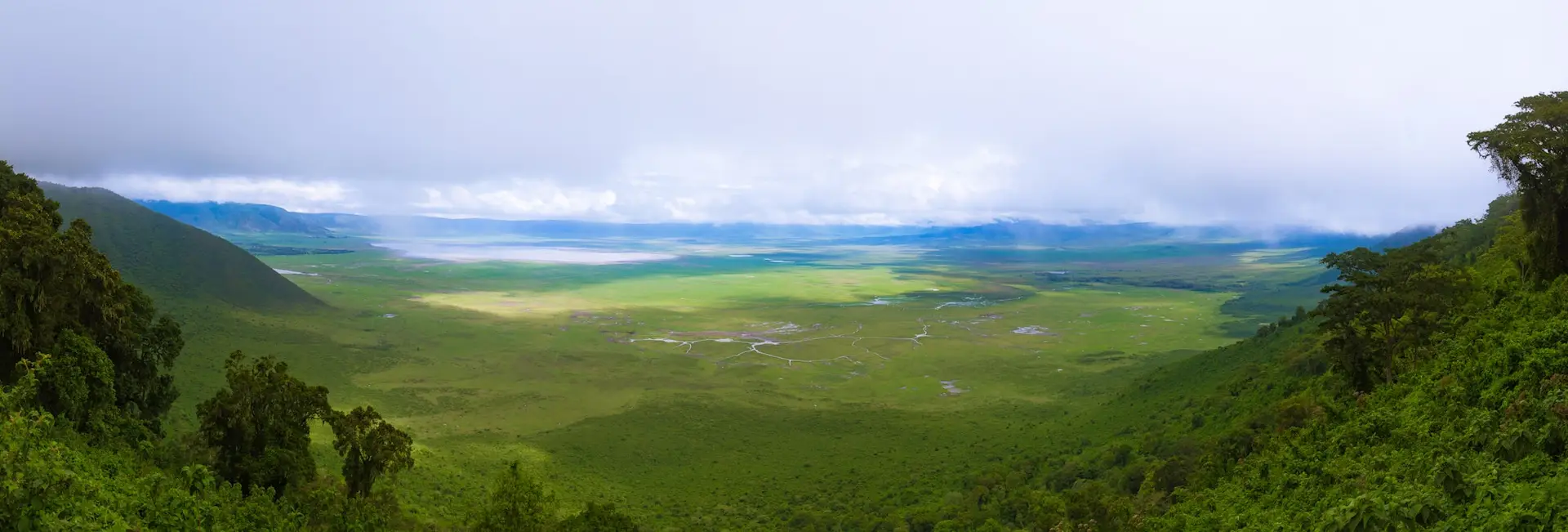
260 sq km of grassland, forest, and soda lake — the main game-viewing area.

Sweeping views down into the caldera, especially striking at sunrise.
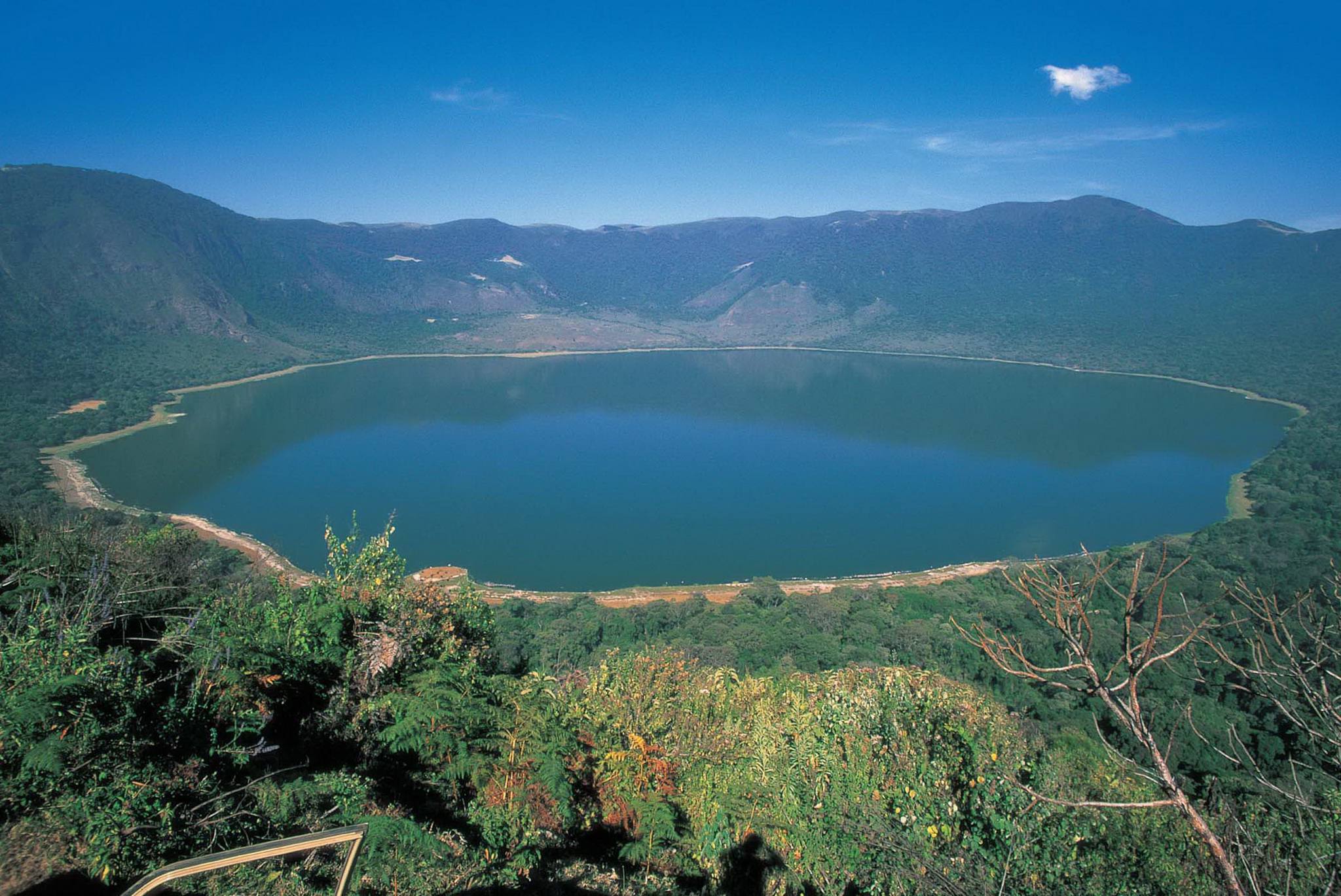
A smaller, less-visited crater with a soda lake, reached on a highland walk.
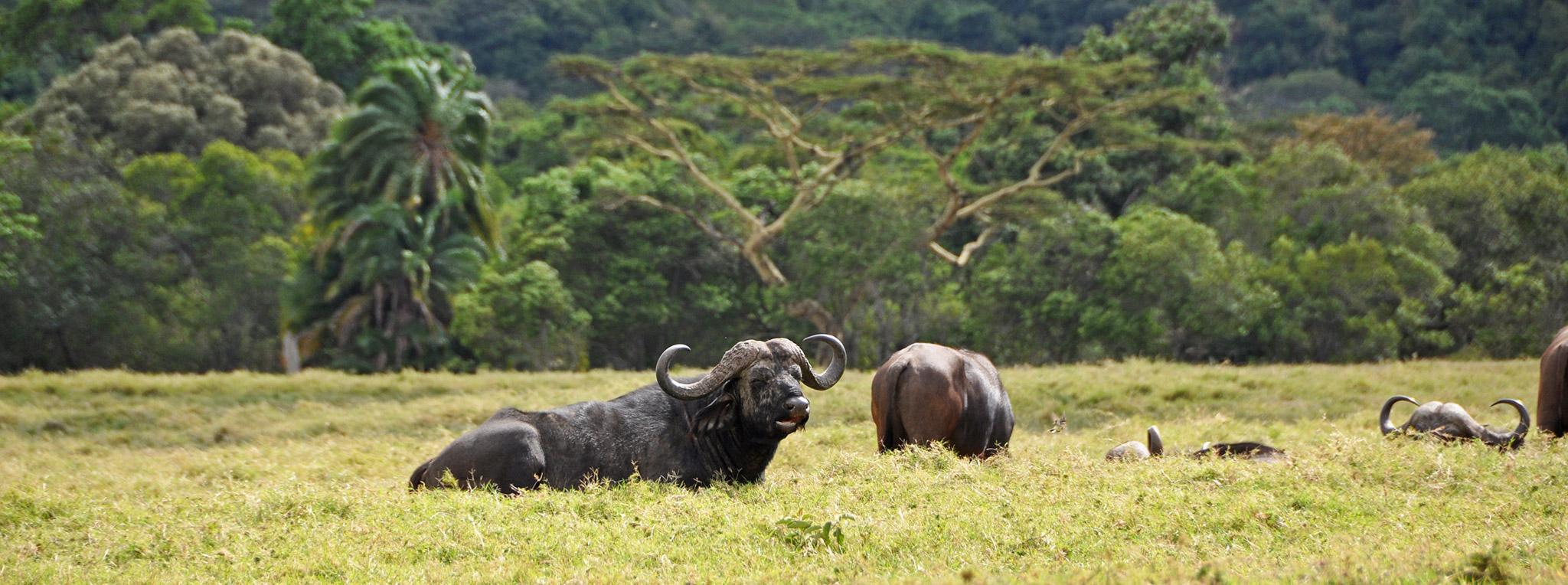
A dense fever-tree forest on the crater floor, home to elephant and often leopard.
Best Time to Visit
Jun–Oct
Dry season, clearest visibility across the crater floor. Peak season, book ahead.
Nov
Short rains begin, landscapes turn green, fewer visitors.
Dec–Feb
Warm and mostly dry, good wildlife viewing with lush scenery.
Mar–May
Long rains. Quietest season, crater still accessible and wildlife still visible.
What to Expect
Dense concentrations of lion, elephant, buffalo, and one of Tanzania's few remaining black rhino populations.
A dramatic bowl of grassland and forest, walled in by steep, forested crater slopes.
Maasai communities graze livestock within the conservation area, visible from the rim roads.
Cool mornings on the rim give way to a warm, wildlife-packed day on the crater floor.
Location
Travel Guide
By road from Arusha, roughly three to 3.5 hours, often combined with Lake Manyara en route.
One full day is enough for the crater itself; many combine it with an overnight on the rim.
A warm jacket for cool rim mornings, plus regular safari wear for the warmer crater floor.
By 4x4 vehicle with a guide — only permitted vehicles descend to the crater floor.
Cool and often misty on the rim, noticeably warmer down on the crater floor.
Descent permits are limited daily, so arrive early for the best light and fewer vehicles.
Why Travel With Us
A local team that plans every detail around you.
Tanzania-born guides and planners who know these parks intimately, not from a brochure.
Every itinerary is built around your dates, pace, and interests — never a fixed template.
Experienced, safety-focused guides who bring the wildlife and landscapes to life.
A Tanzania-based team on call throughout your trip, not just before you arrive.
Real cultural encounters and off-the-obvious-path moments, not staged photo stops.
From the first enquiry to the final sundowner, every detail is planned with care.
FAQ
June to October for the driest, clearest conditions, though wildlife is visible year-round.
One full day is usually enough to explore the crater floor thoroughly.
Crater floor game drives, rim viewpoint stops, and highland walks toward Empakai Crater.
Layered clothing — the rim is cool and often misty, while the crater floor is warm.
By road from Arusha, about three to 3.5 hours, often combined with Lake Manyara.
Yes — the short drive to reach dense wildlife makes it ideal for families and shorter attention spans.
Yes — several rim lodges offer romantic views and private dining over the caldera.
Yes — it sits directly between Lake Manyara and the Serengeti, making it easy to combine.
Tell us what kind of experience you're looking for and let our local travel specialists create a journey around you.