The Great Migration is one of the world's most spectacular wildlife phenomena. It is not a single event on one particular day or in one fixed place — huge herds of wildebeest, zebra and other herbivores move through the Serengeti ecosystem throughout the year in response to rainfall, fresh grass and water. UNESCO recognises the Serengeti for this extraordinary annual movement of herbivores and their predators.
That is why a migration safari needs to be planned around the seasonal pattern rather than a fixed date. A traveller who says “I want to see the migration” should decide what they most want to see — huge herds on the plains, calving, predator activity, river crossings, dramatic green-season landscapes, the northern migration or fewer vehicles — because the best area and dates depend on the answer.
Quick facts — Getting There: Road or Fly-In; Main Areas: Ndutu to Northern Serengeti.
Three Reasons to Follow the Wildebeest Migration
Calving Season
January and February in the southern Serengeti and Ndutu: thousands of newborn calves, green plains and intense predator activity.
River Crossings
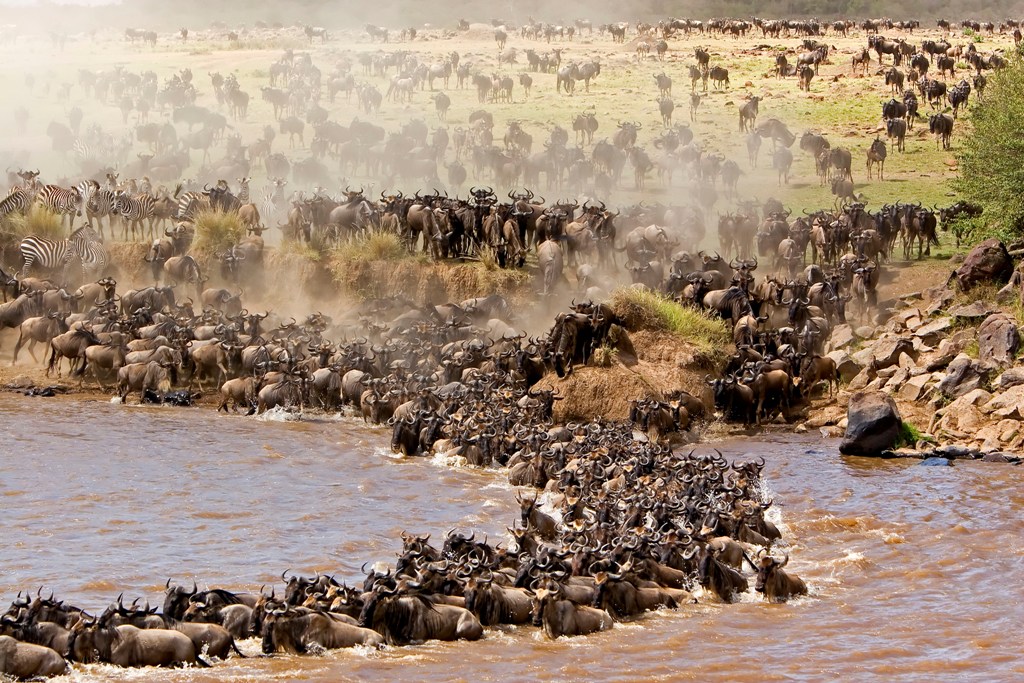
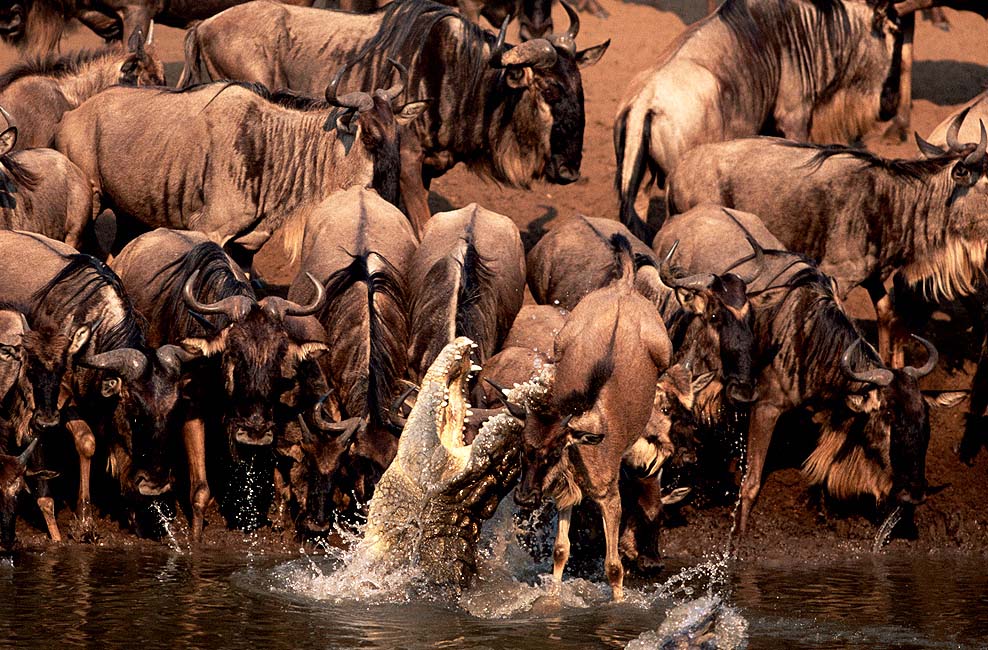
Typically associated with the northern Serengeti from roughly August to October — spectacular, but never guaranteed.
Predators Follow the Herds
Lions, cheetahs, leopards and hyenas all benefit from the abundance of prey moving through the ecosystem.
The Wildebeest Migration Through the Year
Calving in the South
Large concentrations in the southern Serengeti and Ndutu as calving begins — excellent for newborn animals and predator-prey drama.
Moving North & West
Herds move through greener areas toward the western and northern Serengeti as conditions change.
Northern Serengeti
Northern Serengeti and the Mara region become important; the strongest window for river crossings, though timing is unpredictable.
Heading South Again
Short rains stimulate fresh grass and the herds begin moving back toward the southern parts of the ecosystem.
Areas of the Serengeti
Central Serengeti & Seronera
Resident wildlife, predators, water sources and the widest choice of accommodation — a strong all-round base.
Northern Serengeti
Important when the herds move toward the Mara River; rewards several nights rather than one rushed day.
Western Serengeti
The Grumeti ecosystem — woodland and riverine habitat that herds pass through during parts of the cycle.
Southern Serengeti & Ndutu
Short-grass plains that draw enormous concentrations during calving season.
Serengeti Kopjes
Rocky outcrops offering shade, viewpoints and shelter — often with lions resting on or around them.
Ngorongoro Link
Combine the southern migration with the Ngorongoro Crater for two very different ecosystems in one trip.
Planning a Wildebeest Migration Safari
There Is No Single “Migration Month”
The herds move continuously and exact timing changes from year to year. Plan around the broad seasonal pattern and allow flexibility rather than expecting the animals at one place on one date.
Are River Crossings Guaranteed?
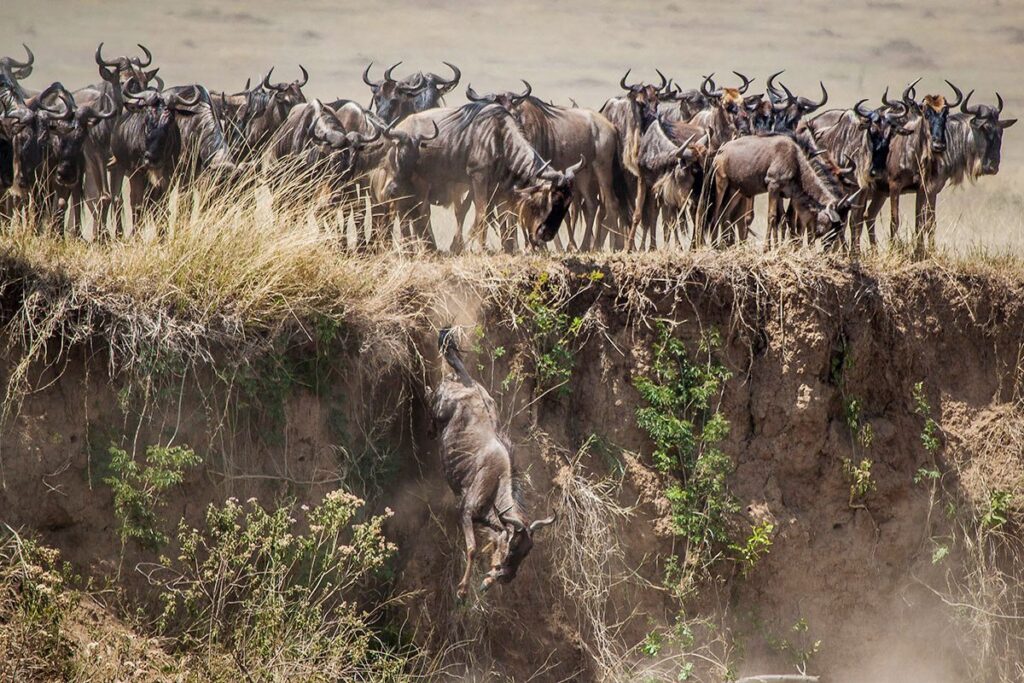
No. A crossing is a natural event, not a scheduled performance. Herds may gather at the river for hours or days, turn back, cross elsewhere or cross when you are not there. Spend several days in the right region rather than expecting one game drive to deliver a crossing.
How Many Days?
Three nights is a good starting point; four or five gives your guide the flexibility to respond to changing conditions, and serious photographers and enthusiasts may want more. Location of your camp relative to the herds matters more than luxury level.
Private or Shared?
A private vehicle lets you decide when to leave camp, stay longer at sightings and focus on what interests you. Shared safaris reduce cost but offer less flexibility.
Cost & Value
Cost depends on travellers, days, accommodation, season, vehicle, parks visited, fees and internal flights. Compare complete itineraries and what is actually included, not a single daily price.
Common Mistakes
Choosing dates only because of the migration, staying only one night, booking accommodation without checking its location, expecting guaranteed sightings, and overpacking or trying to visit too many parks.
Fun Fact: The migration is much more than river crossings — it includes breeding, calving, the search for fresh grass and constant predator-prey interactions. For many wildlife lovers the calving period is just as rewarding as a crossing.
Accommodation Options
Luxury Camps
Premium tented camps and lodges with excellent service, private spaces and fine dining.
Mid-Range
Comfortable rooms or tents with good meals and convenient access to game-viewing areas.
Camping
A direct connection with the wilderness for adventurous travellers.
Seasonal Camps
Some camps operate seasonally in response to herd movements — position matters more than polish.
How to Reach the Serengeti
By Road
Popular on northern circuit itineraries (Arusha → Tarangire → Ngorongoro → Serengeti), with a long road journey that itinerary design should use strategically.
By Air
Scheduled and charter flights serve airstrips across the park, ideal for short safaris, honeymooners and travellers combining with Zanzibar.
Wildebeest Migration Safaris
Frequently Asked Questions
When is the Great Migration?
There is no single month. The herds move year-round: calving in the south from January to March, northern Serengeti and river crossings roughly July to October.
Where is the migration now?
Location changes with rainfall and grass. Tell us your dates and we will plan the area around the expected seasonal pattern.
Are Mara River crossings guaranteed?
No. They are unpredictable natural events; even in peak season herds may gather without crossing.
What is the best month for river crossings?
August to October is the strongest window in the northern Serengeti, though exact timing varies each year.
When is calving season?
Generally January to March in the southern Serengeti and Ndutu area, with February often the peak.
Do predators follow the migration?
Yes. Lions, leopards, cheetahs and hyenas follow the herds, making migration safaris rich in predator sightings.
How many days should I spend?
Three nights is a good start; four or five gives much more flexibility.
Is the migration good for first-time safari travellers?
Yes, but it is best planned around what you most want to see rather than a headline date.
Is the green season good for the migration?
Yes. Calving and the green plains can be spectacular, with fewer visitors and strong photography.
Can I combine the migration with Ngorongoro and Zanzibar?
Yes. It combines naturally with Ngorongoro Crater, Lake Manyara and a Zanzibar beach finish.
Is the migration good for honeymooners?
Yes. Luxury camps, private game drives and balloon safaris pair well with a Zanzibar beach stay.
Should I choose the migration or the dry season?
Neither is universally better. Choose calving for newborns and predators, the northern window for crossings, or the dry season for classic wildlife viewing.
Plan Your Great Wildebeest Migration Safari
Tell us the dates you can travel and what you most want to see — calving, crossings or predators — and we will build the route around the herds.