
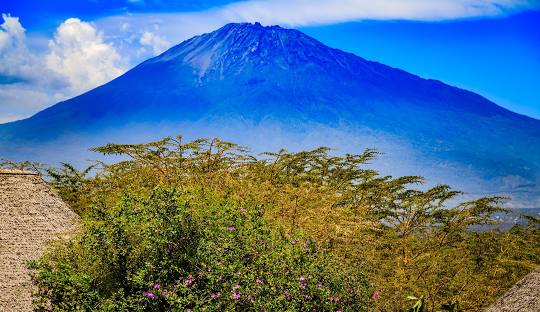
Climb Mount Meru – Tanzania’s Scenic Second-Highest Peak
Rising to 4,566 meters, Mount Meru is a breathtaking dormant volcano and the second-highest mountain in Tanzania. Located within Arusha National Park, it offers a challenging yet highly rewarding trek—perfect for climbers seeking an off-the-beaten-path adventure or preparing for Mount Kilimanjaro.
Often regarded as the ideal acclimatization climb before Kilimanjaro, Mount Meru boasts its own spectacular rewards: from diverse wildlife sightings along the lower slopes to panoramic views of the Great Rift Valley and snow-capped Kilimanjaro visible from the summit.
Our expert-guided Mount Meru treks lead you through lush rainforests, misty alpine meadows, and dramatic volcanic ridges. Each step brings you closer to the crater rim, where the sunrise over the East African plains will leave you in awe.
Why Choose Our Mount Meru Trek?
Professional, licensed mountain guides
Safe, well-paced itineraries for all fitness levels
Excellent opportunity for altitude acclimatization
Wildlife encounters including giraffes, colobus monkeys, and buffalo
Uncrowded trails with spectacular scenic diversity
Experience Mount Meru – a hidden gem in Tanzania’s trekking scene, perfect for adventure seekers, nature lovers, and Kilimanjaro hopefuls alike.
Why Trek Mount Meru?
Scenic Landscapes & Diverse Wildlife
Mount Meru’s beauty lies not only in its scenic landscapes but also in its diverse wildlife and fascinating geological features. As you trek, you’ll pass through habitats home to buffaloes, giraffes, and even elephants, offering a safari-like experience on foot. Meru’s steep slopes and craggy ridgelines culminate in a breathtaking crater, crowned by an ash cone and towering cliffs.
4 Days Mount Meru Trek
- 2 Nights in Moshi/Arusha
- Moderate
3 Days Mount Meru Trek
- 2 Nights in Moshi/Arusha
- Moderate
Other Kilimanjaro Packages
- All Routes
- Pro Guides
Plan Your Climb
Everything You Need to Know
Why Climb Mount Meru
At 4,562 meters, Mount Meru is Tanzania's second-highest peak and Kilimanjaro's quieter neighbor — far fewer climbers, a genuine wildlife-viewing element through Arusha National Park at the base, and a dramatic ash cone and crater rim walk that Kilimanjaro simply doesn't offer. Many climbers use Meru as acclimatization before attempting Kilimanjaro; just as many climb it purely for its own sake.
Best Time to Climb
The same dry windows that work for Kilimanjaro apply here: January to mid-March and June to October offer the clearest skies and most stable trail conditions. The wetter months bring lush green scenery on the lower slopes but muddier, more challenging paths higher up.
How It Compares to Kilimanjaro
Meru is a shorter, steeper climb, typically 3–4 days versus Kilimanjaro's 5–9, with a technical scramble along a narrow ridge near the summit that adds a genuine sense of adventure. Because you start inside Arusha National Park, an armed ranger escorts your group for the first stretch — giraffe, buffalo, and colobus monkey sightings on the approach are common, something Kilimanjaro's routes don't offer.
Altitude & Fitness
At 4,562 meters, altitude sickness is a real consideration, though less severe than on Kilimanjaro's higher summit. Good general fitness and a steady pace are more important than technical climbing skill. Our guides build in a proper acclimatization night at Saddle Hut before the final summit push.
What to Pack
- Warm layers and a proper jacket for near-freezing temperatures at the summit
- Sturdy, broken-in hiking boots with good ankle support for the ridge scramble
- A headlamp for the pre-dawn summit push
- Gloves, a warm hat, and trekking poles
We provide a full packing list and can arrange gear rental once you book.