Mount Kilimanjaro is one of the world's most extraordinary trekking destinations, and Kilimanjaro trekking crosses five distinct ecological zones on the way to the summit. Rising to 5,895 metres above sea level, it is the highest mountain in Africa and the world's highest free-standing mountain, its summit, Uhuru Peak, sitting on Kibo, one of the mountain's three volcanic cones. Unlike many famous high-altitude mountains, Kilimanjaro does not require technical mountaineering skills — no ropes, no climbing experience. The real challenge is altitude, endurance, cold and long trekking days.
For many travellers, reaching Uhuru Peak is more than a physical achievement. It is a journey through dramatically different ecosystems, from tropical rainforest to high-altitude desert and finally the cold volcanic summit of Kibo — a transformation few treks anywhere in the world can match.
Quick facts — Height: 5,895m / 19,341ft; Duration: 6–9 Days on the Mountain.
In short, Kilimanjaro is the highest mountain in Africa. First, it rises to 5,895 metres above sea level. Then you walk to Uhuru Peak on Kibo, one of its three volcanic cones. Also, you do not need technical climbing skills.
However, altitude, cold and long days make the climb hard. Because of this, the route you choose matters. After you read this guide, you can compare the main routes. Finally, we can help you plan the route and season that suit you.
See what past travelers say about us on SafariBookings, TripAdvisor and Google reviews, or read our customer reviews page. To plan your trip, see our Mount Meru trekking and safari packages.
What Makes Kilimanjaro Trekking Different
No Technical Skill Needed
The standard routes are trekking routes, not technical climbs — the real challenge is altitude, endurance and long days rather than ropes or climbing gear.
Five Ecological Zones
From cultivated lower slopes through rainforest, moorland and alpine desert to the arctic summit — few treks anywhere let you cross so many worlds in one expedition.
An Extraordinary Summit
Standing at Uhuru Peak as the sun rises above the clouds — the defining moment of the climb, and for many, of their entire trip to Tanzania.
Three Volcanic Cones
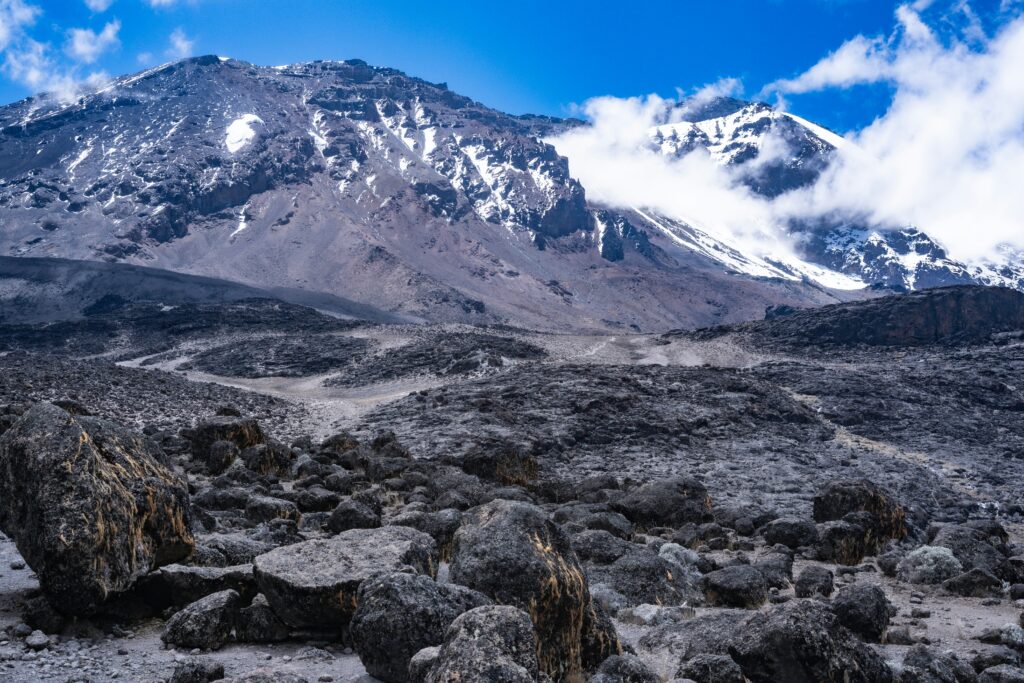
Kilimanjaro is a massive volcanic landscape, not a single pointed peak.
- Kibo — 5,895m
- Mawenzi — 5,149m
- Shira — 3,962m
- Uhuru Peak
- Shira Plateau
- Ash Pit
Main Kilimanjaro Trekking Routes
Machame
The “Whiskey Route” — scenic, popular and a strong choice for reasonably fit first-timers, camping throughout.
Lemosho
Approaches from the west with excellent scenery and strong acclimatisation — a favourite for first-time trekkers.
Marangu
The only route using mountain huts instead of tents — the “Coca-Cola Route,” familiar but still demanding on summit night.
Rongai
Approaches from the quieter northern side near the Kenya border, with a different character and views.
Northern Circuit
The longest approach, built around maximum acclimatisation time and some of the mountain's quietest sections.
Umbwe
Steep and direct — generally better suited to experienced trekkers rather than a first Kilimanjaro attempt.
Everything You Need to Know About Kilimanjaro Trekking
The Biggest Kilimanjaro Trekking Challenge: Altitude
Altitude, not technical climbing, is the real challenge on Kilimanjaro, and it affects people regardless of fitness — a strong athlete can still get altitude sick, while a moderately fit climber can acclimatise well. This is why we favour longer itineraries with proper acclimatisation days over the shortest possible route. Symptoms can include headache, nausea, fatigue and shortness of breath; never hide symptoms from your guide, and always report how you're feeling.
Training & Summit Night for Kilimanjaro Trekking
Training should focus on long walks, hill hikes, stair climbing and general cardiovascular fitness rather than gym work alone — you're training your body for time on its feet, not short bursts of intensity. Summit night is the hardest part of the climb: you typically set off in darkness so as to reach Uhuru Peak around sunrise, walking slowly — pole pole — through cold, fatigue and thin air.
Best Time for Kilimanjaro Trekking
Kilimanjaro can technically be climbed year-round, but the commonly preferred periods are June to October and December to early March, when conditions are generally drier and clearer. The wetter periods (March–May and October–November) bring heavier rainfall and muddier trails, though the mountain remains climbable — weather can change rapidly regardless of season.
What's Included & Why Climbs Cost What They Do
A Kilimanjaro price covers far more than a park entrance fee: park and conservation charges, your guide and porter team, cooks, food, tents or hut fees, transport, safety and emergency arrangements all add up across every day of the climb. A suspiciously cheap quote is worth investigating carefully — it may mean a lower guide-to-client ratio, less acclimatisation time, weaker equipment or porters who aren't being treated fairly.
Combining Kilimanjaro Trekking With a Safari
Climbing before your safari is the sequence we usually recommend: the mountain is physically demanding, so finishing it first lets you recover while enjoying a more relaxed few days on game drives afterwards. A classic combination is Kilimanjaro → recovery → safari → Zanzibar, giving you the mountain, the wildlife and the ocean within a single Tanzania trip.
Fun Fact: Uhuru means “freedom” in Swahili. The summit was named around the time of Tanzania's independence, making it one of the few mountain peaks in the world whose name is tied directly to a nation's history.
Seasons for Kilimanjaro Trekking
Dry Season
Clearer conditions and a popular window, though summit temperatures remain very cold.
Short Dry Spell
Another favoured period, often relatively clear and ideal to combine with a northern safari.
Long Rains
Wetter, muddier lower sections and cloud, but the mountain stays climbable.
Short Rains
Heavier rainfall possible; weather can change rapidly in any season.
Accommodation During Kilimanjaro Trekking
Tented Camps
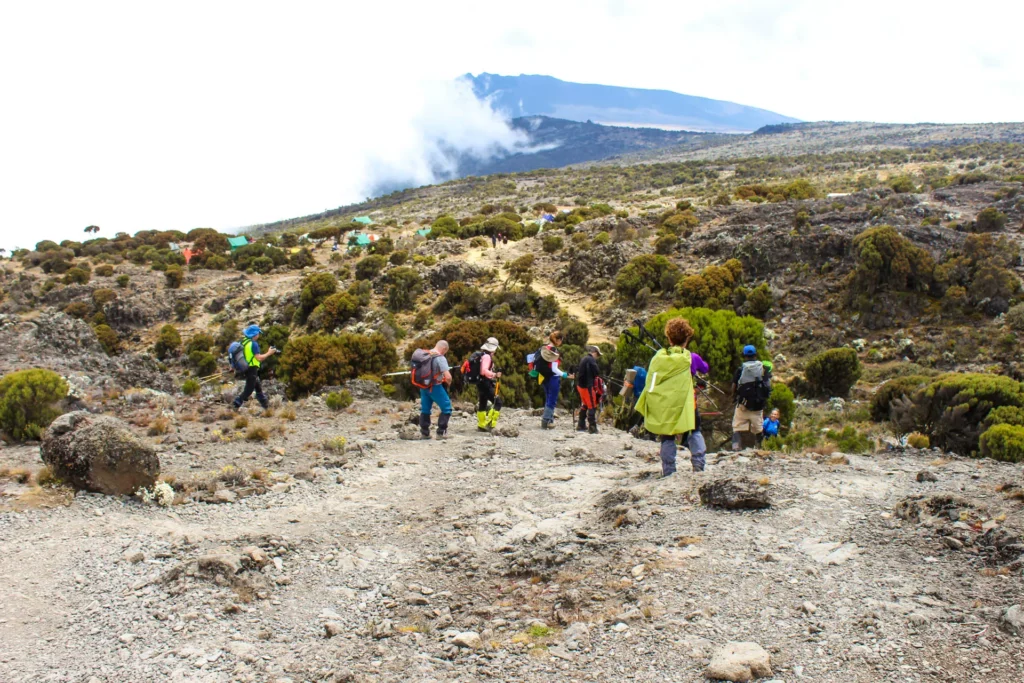
Machame, Lemosho, Rongai and most routes use designated tented camps set up by your crew.
Mountain Huts
Marangu is the one route using huts — Mandara, Horombo and Kibo.
Before the Climb
Hotels or lodges around Moshi or Arusha for rest, briefing and gear checks.
After the Climb
Recovery in Moshi or Arusha, or on to a safari lodge or Zanzibar beach resort.
How to Reach Kilimanjaro
By Air
Kilimanjaro International Airport (JRO) is the main gateway, roughly 40–45 km from the park area, with Moshi or Arusha as the usual base.
By Road
Moshi and Arusha are the main access towns; your crew transfers you to the mountain gate for your chosen route.
Treks & Safaris to Combine With Kilimanjaro Trekking
Kilimanjaro Trekking FAQs
How high is Mount Kilimanjaro?
5,895 metres (19,341 feet) at Uhuru Peak on Kibo.
Is Kilimanjaro difficult to climb?
It is challenging but achievable for many reasonably fit people. Altitude is the biggest challenge, not technical climbing.
Do you need climbing experience?
Technical climbing experience is generally not required for the standard trekking routes.
How many days does Kilimanjaro take?
Most climbs take approximately 5–8 days depending on route and itinerary; longer itineraries give better acclimatisation.
Which Kilimanjaro route is best?
Lemosho, Machame and the Northern Circuit are popular choices for scenery and acclimatisation. Marangu uses huts instead of tents.
Can beginners climb Kilimanjaro?
Yes, with proper preparation, an appropriate itinerary and professional mountain support.
Can you climb Kilimanjaro all year?
Climbing is possible year-round, but many travellers prefer June–October and December–early March.
Is Kilimanjaro covered in snow?
Snow and ice can occur around the summit, although conditions vary.
Do you need a guide?
Yes. Climbs must be conducted with licensed guiding arrangements; solo trekking is not permitted.
Can you see wildlife on Kilimanjaro?
Yes. The lower forest supports colobus monkeys, blue monkeys, bushbuck and duiker.
Can you combine Kilimanjaro with a safari?
Yes. Climbing first, then a northern Tanzania safari and Zanzibar, is a classic combination.
Do you need to be an athlete?
No. Good endurance, preparation and mental determination matter more than elite fitness.
What does "pole pole" mean?
"Slowly, slowly" in Swahili — the pace encouraged throughout the climb to aid acclimatisation.
What happens if you cannot reach the summit?
Your safety comes first. Guides may recommend turning around if altitude, weather or another condition makes continuing unsafe.
Does fitness prevent altitude sickness?
No. Fitness helps with the physical demands but does not guarantee protection; a slower ascent matters more.
Can I visit Kilimanjaro without climbing it?
Yes. Guided day hikes, nature walks and Shira Plateau visits are among non-summit experiences, subject to park regulations.
Kilimanjaro Trekking With Us
Tell us your fitness level, available days and whether you want a safari or Zanzibar afterwards — we will design the route.
Compare our 7-day Machame route and 8-day Lemosho route itineraries, or see all destinations. See what past travelers say about us on SafariBookings, TripAdvisor and Google reviews, or read our customer reviews page.