
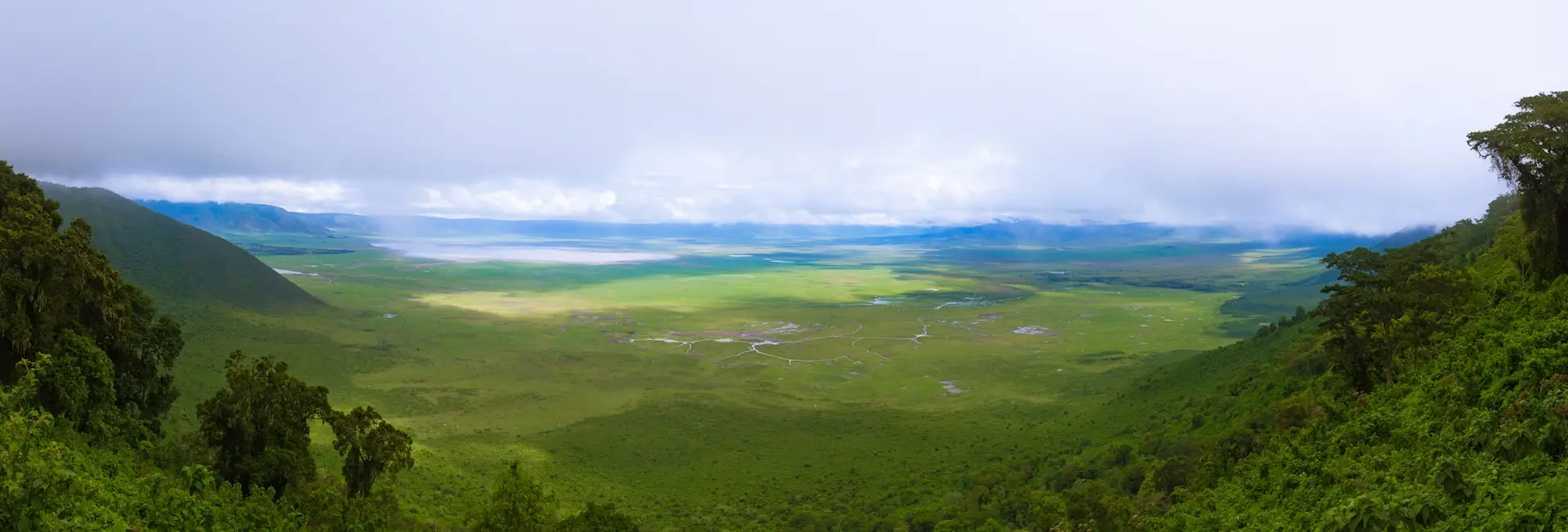
Ngorongoro Crater is one of the most famous wildlife areas in Africa. It is a huge volcanic caldera in northern Tanzania, and its floor is home to about 25,000 animals. Lions, elephants, buffalo, hippos and the rare black rhino all live there. As a result, it is one of the best places in Tanzania to see big wildlife in a single day.
The crater lies in the Ngorongoro Conservation Area, about 180 km from Arusha. The drive takes roughly three to four hours. Most visitors combine it with the Serengeti, Lake Manyara and Tarangire National Park. If you are short on time, our Ngorongoro Crater day safari from Arusha is a good option.
Ngorongoro is best known for its dense wildlife, steep volcanic walls and views from the crater rim. Many people call it the world’s largest intact and unfilled caldera.
In short, Ngorongoro Crater is a compact, wildlife-rich caldera. First, you drive up to the crater rim. Then you go down to the crater floor for a game drive. Finally, you enjoy picnic lunches and close sightings of big game.
Wildlife sightings are never guaranteed. However, the animals live in the crater all year, so your chances are very good.
To plan your trip, see our safari packages, destinations and accommodations. See what past travelers say about us on SafariBookings, TripAdvisor and Google reviews, or read our customer reviews page.
Where Is Ngorongoro Crater?
Ngorongoro Crater is in northern Tanzania, inside the Ngorongoro Conservation Area. The area lies between Lake Manyara and the Serengeti. It is about 180 km west of Arusha.
The crater sits high in the Crater Highlands. Its rim is about 2,200 metres above sea level, so the air is cool. The crater floor is about 600 metres lower.
Because of this position, one trip shows you two different worlds. On the rim, you find misty forest and cool air. Below, you find warm grassland full of animals.
What Is Ngorongoro Crater Famous For?
It is best known for three things:
1 The world’s largest intact and unfilled caldera
2 Dense wildlife, including all of the Big Five
3 The rare and endangered black rhino
It is also a UNESCO World Heritage Site. Ngorongoro is a Conservation Area, not a national park. As a result, Maasai herders live and graze their cattle alongside the wildlife.
How the Crater Formed
The crater is a collapsed volcano. Millions of years ago, a giant volcano erupted and then fell in on itself. The result is a caldera about 20 km across, with a floor of about 260 square km.
The steep walls rise about 600 metres. They act like a natural fence. Because of this, many animals stay inside the crater all year.
Wildlife in Ngorongoro Crater
The crater is one of the best places in Africa to see lions and the endangered black rhino. More than 25,000 large animals live on the crater floor.
Depending on the season and luck, visitors may see:
Giraffes do not live on the crater floor. Also, sightings are never guaranteed. The black rhino is rare and often far away, so bring binoculars.
Habitats on the Crater Floor
The crater floor looks simple from the rim. However, it holds several habitats close together:
- Open grassland plains, where herds of zebra and wildebeest graze
- Lake Magadi, a shallow soda lake that often attracts flamingos
- Lerai Forest, a woodland of fever trees where elephants and leopards shelter
- Gorigor Swamp, a green wetland that draws buffalo and hippos
- Ngoitokitok Springs, a popular picnic site beside a hippo pool
Because these habitats sit so close together, one game drive can show you many different animals.
Birdwatching in the Crater
The Ngorongoro area has about 500 bird species. The lake, swamp and grassland each attract different birds.
Flamingo numbers change with the water level in Lake Magadi. So, we cannot promise them, but they are often a highlight.
Things to Do at Ngorongoro Crater
A game drive on the crater floor is the main activity. However, the wider conservation area offers more:
- Full or half-day game drives on the crater floor
- Picnic lunch beside the hippo pool at Ngoitokitok Springs
- Sunrise and sunset views from the crater rim
- Visits to Olduvai Gorge on the way to the Serengeti
- Cultural visits to a Maasai village
- Guided hiking in the Crater Highlands, such as Olmoti and Empakaai craters
Walking is not allowed on the crater floor. Availability changes, so we confirm what is open on your dates when we plan your trip.
Olduvai Gorge and Maasai Culture
Olduvai Gorge lies on the road between Ngorongoro and the Serengeti. It is a famous fossil site where researchers found early human remains. A small museum explains the story.
Maasai herders also live in the conservation area. A village visit is a good way to learn about their way of life. See our cultural experiences for more ideas.
When Is the Best Time to Visit Ngorongoro Crater?
Wildlife lives in the crater all year, so you can visit in any month:
- June to October (dry season): clear game viewing and good roads, but busy in July and August.
- November to December (short rains): green scenery and fewer visitors.
- January to February: warm and mostly dry, and a good time to combine the crater with calving season near Ndutu.
- March to May (long rains): lush and quiet, but tracks can be muddy and the rim is often misty.
Early mornings are best in every season. Animals are more active and the light is soft.
How Many Days Do You Need at Ngorongoro?
One full game-drive day is enough to see the crater. However, an overnight stay near the rim or in Karatu gives you an early start and a more relaxed trip.
Ngorongoro Crater Day Safari From Arusha
A day safari from Arusha is possible. You leave early, drive about three to four hours to the rim and spend several hours on the crater floor. Then you drive back in the evening. It is a long day, but it works well if you are short on time. See our Ngorongoro Crater day safari or request a quote and we will plan it around your dates.
Is It Good for Families and First-Timers?
The crater is a great choice for families and first-time safari travelers.
- Wildlife is easy to see, so children stay interested
- Game drives are on a compact crater floor
- The crater is a good place to see a rhino, a lion and a hippo in one day
- Many lodges offer family rooms
For more ideas, see our family safari guide.
Ngorongoro vs Serengeti
Both are on the northern circuit and are often combined.
| Ngorongoro Crater | Serengeti |
|---|---|
| Compact caldera of about 260 square km | Vast plains of about 14,700 square km |
| Wildlife lives there all year | Famous for the Great Migration |
| Black rhino and dense lion numbers | Big cats, plains game and river crossings |
| Half a day to a full day is enough | Two or more days are best |
| Cool highland rim with crater views | Open, warm plains |
If you have time, visit both. Read more in our Serengeti guide.
Can You Combine Ngorongoro With Other Parks?
Yes. Ngorongoro Crater fits easily into a northern Tanzania safari. A classic route looks like this:
The crater appears in several of our itineraries, including the 2 Days Tarangire and Ngorongoro Safari, 3 Days Tanzania Safari, 6 Days Tanzania Safari, 7 Days Tanzania Safari and 3 Days Fly-In Safari from Zanzibar. You can also pair it with Lake Manyara or Tarangire National Park.
How to Get to Ngorongoro Crater
Most visitors reach the crater by road. The drive from Arusha takes about three to four hours. The road passes Mto wa Mbu and Karatu, then climbs to the crater rim.
Only four-wheel-drive vehicles can enter the crater. Your safari vehicle and guide handle the descent road. If you prefer to save time, ask us about flights to nearby airstrips, followed by a road transfer.
Where to Stay Near the Crater
You can stay on the crater rim, in nearby Karatu, or at a public campsite. Rim lodges have the best views, but Karatu often has more choice and lower prices. Public campsites are basic.
When choosing accommodation, consider:
Browse our accommodations for ideas, or tell us your budget and we will suggest the right fit.
What Should You Pack?
The rim is cool, so pack for changing weather. Useful items include:
See our full safari checklist before you travel.
Park Rules and Safety
Ngorongoro is a wild place, and the rules protect both people and wildlife.
Stay inside the vehicle except at marked picnic sites. Keep a respectful distance from animals, never feed them and keep noise low. Time on the crater floor is limited, so an early start helps. Always follow your guide’s instructions.
Responsible Tourism
A responsible visit helps wildlife and local communities. You can help by:
- Respecting wildlife and keeping noise low
- Staying on designated tracks
- Avoiding litter and single-use plastics
- Asking permission before photographing people
- Supporting Maasai-owned cultural visits
- Following conservation area regulations
Frequently Asked Questions
Is Ngorongoro Crater a national park?
No. It is part of the Ngorongoro Conservation Area. The area protects wildlife and also allows traditional Maasai pastoral life.
Can I visit Ngorongoro Crater in one day from Arusha?
Yes. However, it is a long day because the drive takes about three to four hours each way. An overnight stay near the crater gives you a more relaxed start.
Can I see the Big Five in Ngorongoro?
Yes. Lions, elephants, buffalo, black rhinos and leopards all live in the area. However, leopards are shy and rhinos are rare, so sightings are never guaranteed.
What is the best time to visit Ngorongoro Crater?
You can visit all year. June to October is the driest time and has the clearest game viewing. Also, the green season is quieter and very scenic.
Is it cold at Ngorongoro Crater?
Yes, it can be. The rim is about 2,200 metres above sea level, so mornings and nights are cool. So, bring a warm layer and a rain jacket.
Can I walk inside the crater?
No. Walking is not allowed on the crater floor. However, you can walk in the Crater Highlands with a ranger when it is arranged in advance.
Can I combine Ngorongoro with the Serengeti?
Yes. It is one of the most popular safari combinations in northern Tanzania. Most itineraries visit the crater on the way to or from the Serengeti.
Final Thoughts
The crater rewards visitors who want big wildlife in a stunning setting. Lions, elephants, hippos and rare black rhinos share one huge volcanic bowl.
Whether you visit on a Ngorongoro Crater day safari from Arusha or as part of a longer trip, we will plan it around your dates, budget and interests.
Pair the crater with the Serengeti and Lake Manyara, or see all destinations. See what past travelers say about us on SafariBookings, TripAdvisor and Google reviews, or read our customer reviews page.